The Safety Case for Simulation-Based SPF Training
Most explanations of "why VR training" lead with cost savings or convenience. For spray foam specifically, the stronger and more honest argument is safety — and it's worth stating plainly instead of burying it under a technology pitch.
The Actual Hazard a New Hire Faces
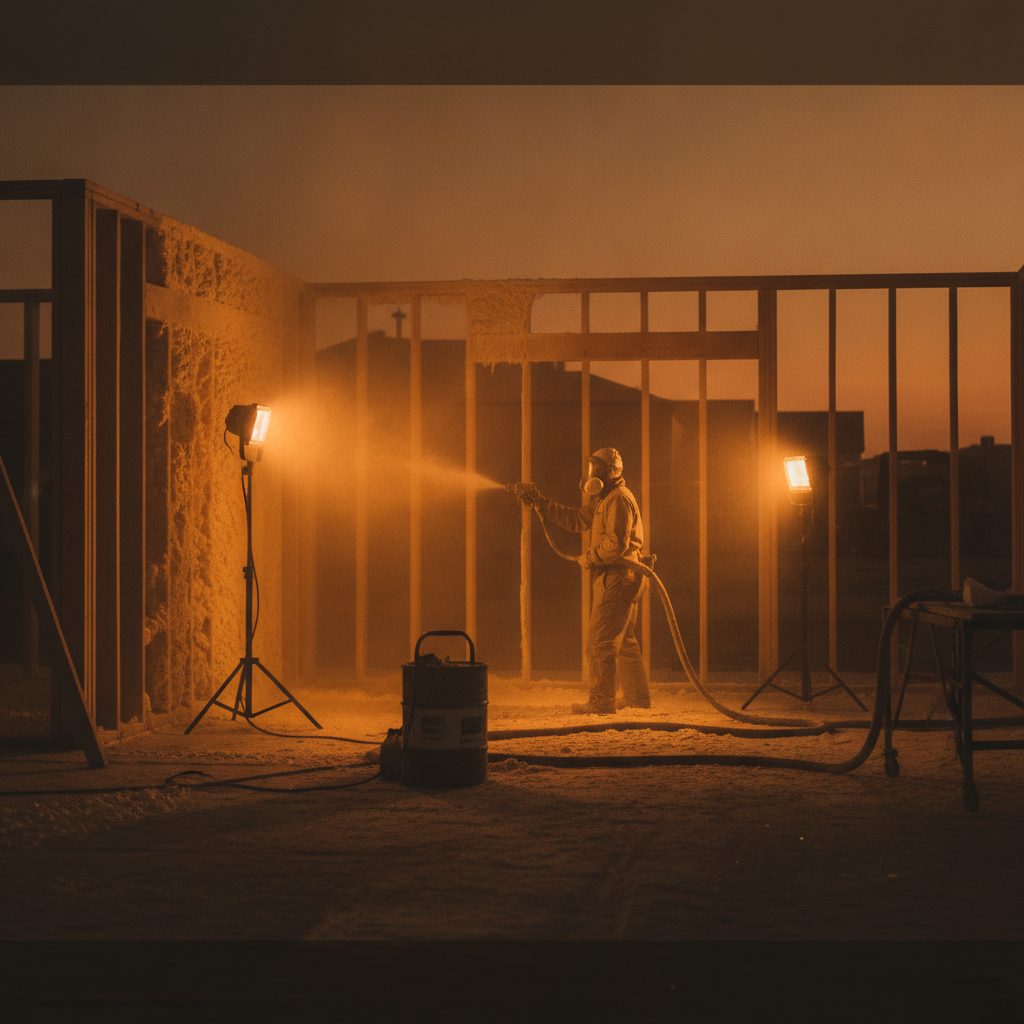
Spray polyurethane foam application involves airborne isocyanate exposure, almost always MDI, during and shortly after spraying. Correct protection requires selecting the right respiratory protection level for the specific application — a confined attic or crawlspace demands more protection than an open, well-ventilated cavity — fitting it correctly, and understanding re-entry timing for anyone near a fresh application before off-gassing has dropped to safe levels. Getting any of that wrong has real health consequences, not just a quality-control problem.
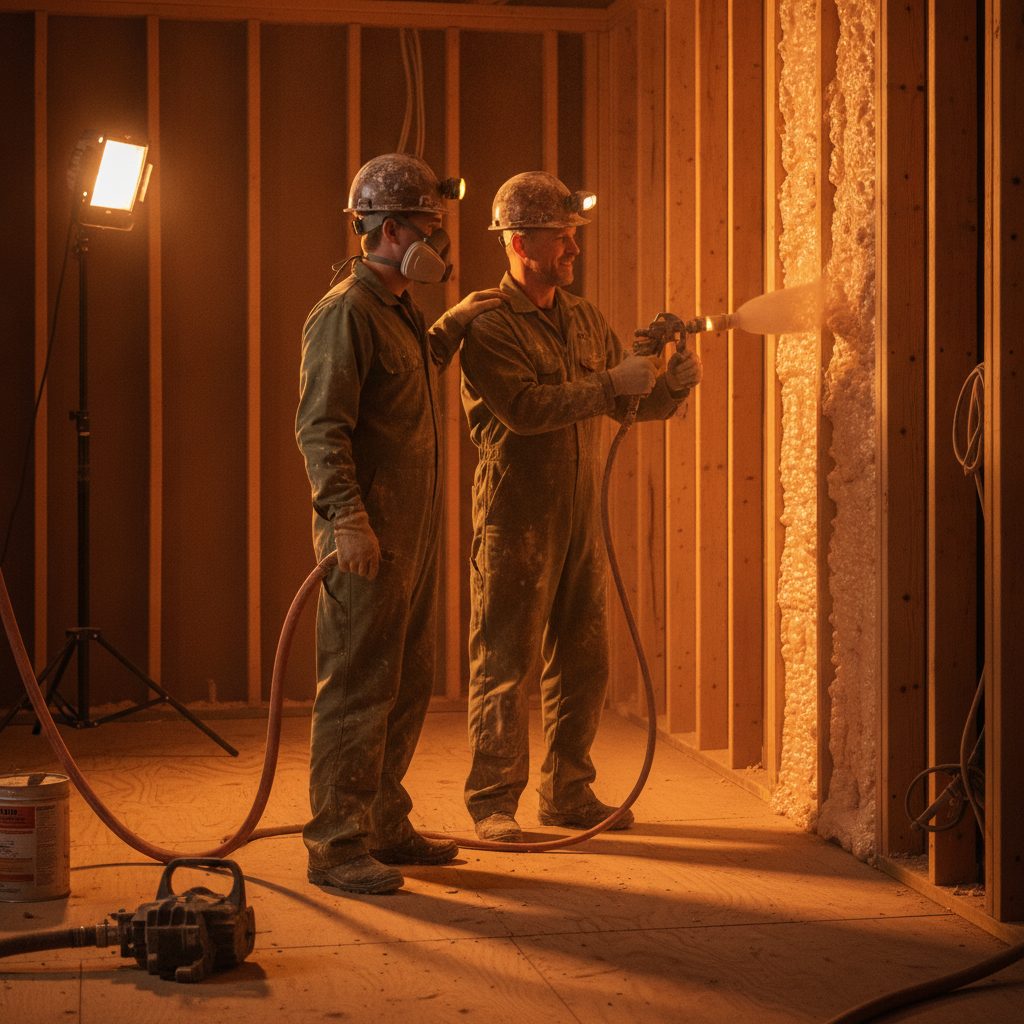
Today, a new installer typically learns this by being present around the real hazard from very early in their training, guided by an experienced sprayer's judgment in real time. That's a reasonable way to transfer tacit knowledge, but it's also a training model where the learner's first real exposure to a mistake — misjudging ventilation, wearing the wrong respirator for the space — happens in the actual hazardous environment, not a controlled one.
What Simulation Changes About That
A VR safety module doesn't need to simulate the full spray technique to deliver real safety value. Even a narrowly scoped simulation — present a scenario, have the trainee select and fit the correct respirator, check ventilation adequacy, and identify whether the situation is safe to proceed — creates a genuine training rep with zero chemical exposure risk. A trainee can get a scenario wrong, understand exactly why, and retry immediately. That loop doesn't exist in the same safe, repeatable form on a real job site, where getting it wrong has actual consequences.
This is the same logic behind flight simulators for emergency procedures, or medical simulation training for rare high-stakes scenarios: the value isn't replacing real experience, it's giving someone controlled, repeatable exposure to judgment calls before the real version of that judgment call actually matters.
Why This Argument Is Stronger Than the Cost Argument
A cost-savings pitch for VR training ("save money on wasted material") is real but secondary. The safety argument doesn't depend on assumptions about adoption economics or manufacturer buy-in — it's true regardless of whether anyone ever builds the product. That's also why, if a real spray foam VR safety product does launch, evaluating it on how rigorously it reflects actual OSHA and SPFA-aligned safety standards matters more than how impressive the graphics are.
What This Doesn't Claim
To be direct: no such product exists today for spray foam specifically. This is the case for why it would be worth building, based on a real and serious hazard profile — not a review of a product that's on the market.
See the full technology and precedent case, or read how VR training compares to hands-on training for the honest limitations.